


Lessons on Brand Marketing ala the FIFA World Cup
How marketers can think about showing up on the world stage

Maddy Loucas
Friday, July 17, 2026
Lessons on Brand Marketing ala the FIFA World Cup
How marketers can think about showing up on the world stage
The FIFA World Cup is one of the most anticipated and watched football tournaments around the world. Similar to the Olympics, the World Cup is held every four years and puts the mighty footballing nations of the world against each other in a bracket-style format.
The first World Cup held in 1930 was hosted by and won by Uruguay. Back then, the European teams had to travel by boat to the South American host country which, the Wall Street Journal argues, contributed to a win by home field advantage. That year, Argentina came in 2nd and the United States in 3rd – perhaps this argument checks out.
Nearly 100 years in the making, this small tournament of 13 countries has turned into a behemoth with 48 countries participating this year (the most ever in this format).
What we love about sporting events like this – and sports in general – is they provide a universal language for connecting with people. You can be on a beach vacation and pick up a volleyball. You can go to a park and play pickup basketball. Players, even amateurs, know the rules of the road, the non-verbal cues, and the nuances to speak the same language.
Not only are sports a universal language, but sporting events are universal programming. At the PR Week Sports Conference in NYC this past April, Julie Safer with Civic PR described sports as the “original unscripted TV.” In a world of reality TV, which boomed in the mid-aughts (that’s the early 2000s) and has a stronghold on audiences today (Love Island, anyone?), you can look at it and say, “This isn’t new. Sports did it first.”
Sports programming today is its own Goliath with many professional leagues now considering themselves media companies. And, as you would expect, brands are all over this.
So, in the spirit of competitive sports, we’ve identified the World Cup brands that could be considered champions of our three marketing tenets, and we share the lessons marketers can take away.
++++
Lesson One: Brand Recognition
When brands stand taller than their logos
A brand is a promise it makes to its customers. Over time, through shapes, sounds, textures, and repeated exposure, it can start to evoke a feeling. And when that feeling matches the promise you made, your brand can become bigger than its logo. When you have this down pat, your brand becomes sticky, and this is how it builds recognition and legacy.
Champion: Levis
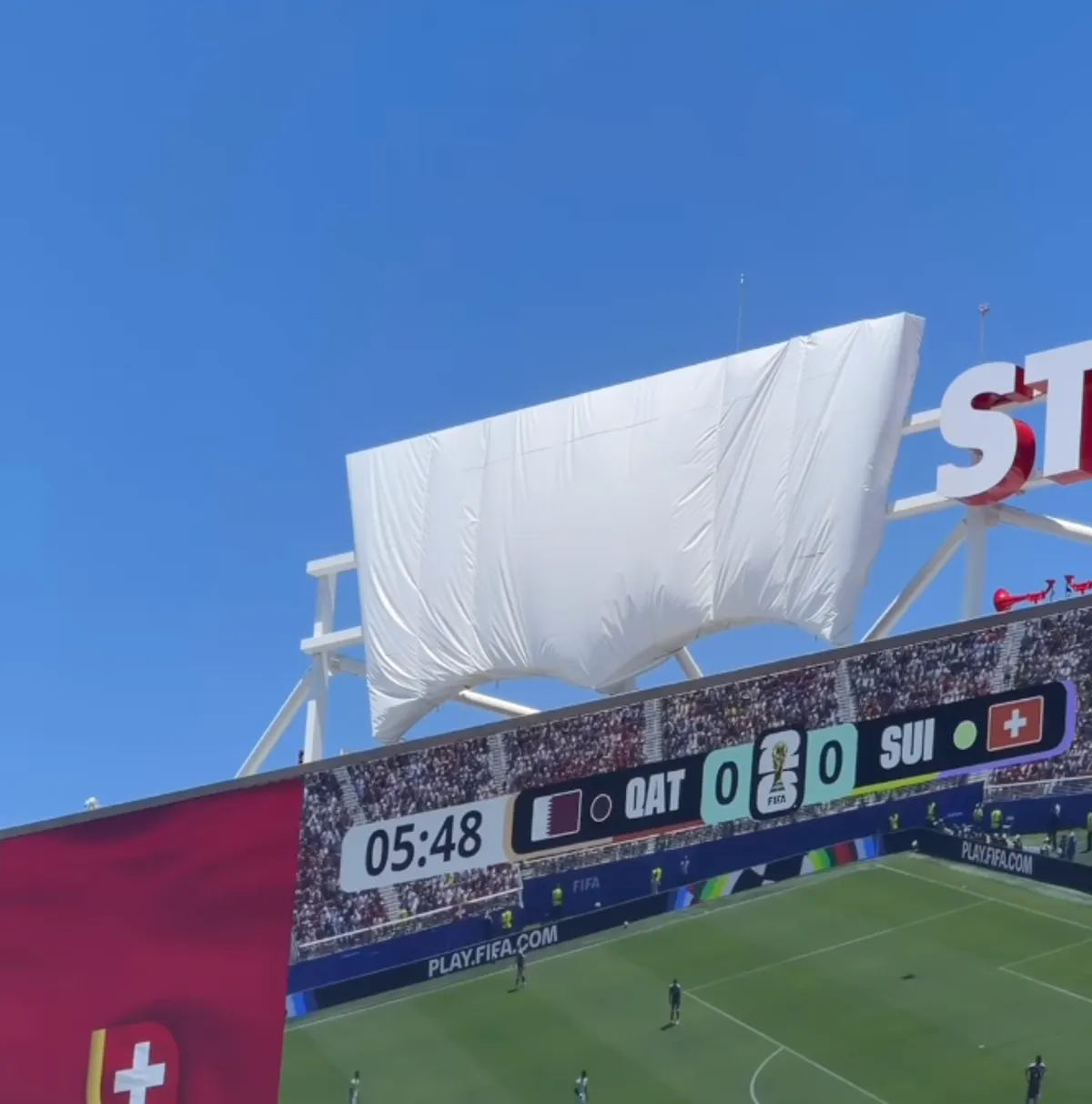
Per FIFA rules, there couldn’t be any corporate sponsors of any stadium where matches were being held. In perhaps a maliciously compliant way, Levi’s went ahead and covered their logo at San Francisco Stadium. This went viral. Despite the logo being covered, viewers immediately recognized the Levi’s brand. The absence of the logo demonstrated just how strong Levi’s brand recognition is, and ironically, FIFA helped reinforce this point.
Here’s when Levi’s capitalized on this virality. Instead of looking at the cover up as a negative, Levi’s leaned into the moment and created a limited edition clothing line featuring the redacted logo. Not only is this a clever execution around a cultural marketing moment, but it emphasizes how customers recognize, and want to be a part of, Levi’s.
Honorable Mention: Heinz
With Levi’s unintentionally kicking off the trend of redacted brand logos, Heinz jumped in by posting a photo of a ketchup bottle (the giant tub with the push-down handle you would see at a stadium) with tape over the Heinz logo. While this was a fun example of participating in the trend, what was more effective and relevant to the World Cup came next – the creation of their Red Card and Yellow Card ketchup and mustard Penalty Packets. Despite there being absolutely no branding or text on the Penalty Packets, consumers can still associate the condiments with the Heinz brand. And yes, these are real. They hold a bundle of ketchup and mustard packets.
Call for Substitution: [Redacted]
As Ryan Selvy, Host of The File News Show, pointed out in his recent video, “social media managers have seen the Levi’s thing” (said with a bit of a sigh). Just like in the sports world, we have our first place winners and our runners up. But, there’s always a few that could be subbed out. The goal of the trend was to have your redacted logo still recognizable to consumers. When your logo and your example don’t work, it begs the question of whether or not it made sense to even participate.
Lesson Two: Brand Perception
When brands lean in for their audience
Soccer is a sport that reaches every demographic and spans cultures, according to Cynthia Martinez from the US Soccer Federation. You have kids who play, their families who watch, your casual fans, and your dedicated insiders who travel for their team (American Airlines as the official sponsor for this group).
A recent Nielsen study shows soccer fandom in North America has increased 10% in the last five years, and US soccer fans are young at an average age of 33. The FIFA World Cup games hosted in North America further amplify our region’s growing interest in soccer.
With these facts to stand on, marketers know there’s something here. But, both presence and relevance are needed. Simply put, your brand has to align with the moment, and the moment has to align with your brand. In this case, when your brand is talking about FIFA, and when FIFA has selected your brand as a partner, you have the makings of a meaningful symbiotic relationship – one that benefits brand perception on both sides.
Champion: Lay’s
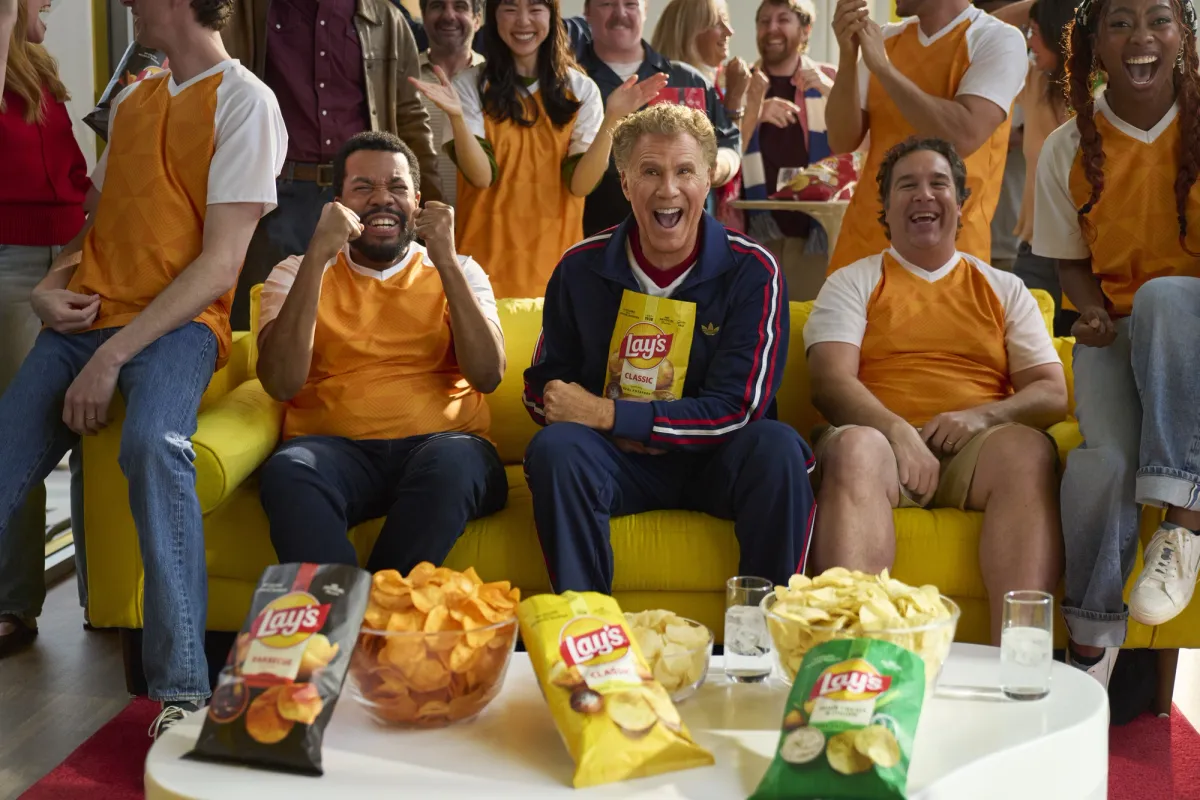
Lay’s produced a FIFA World Cup campaign starring Will Ferrell which used the hook “jump on the bandwagon.” The ad cleverly, and quite directly, points out that not all Americans follow football, but all are welcome and invited to jump on the bandwagon. One of the ads goes as far as to say that when one soccer team loses, we can “just pick another team.” However you got here, we can enjoy the sport and Lay’s potato chips together.
As a category, snacking makes a lot of sense here. 76% of Gen Z snack at least once per week, more than any other demographic. Salty snacks are named as Gen Z’s snack of choice. And, 66% of people surveyed by Nielson say they are doing something else like watching TV while eating or snacking. The communal activity of watching sports and sharing food, even if you don’t have skin in the game, goes a long way for Lay’s and its efforts to influence brand perception.
Honorable Mentions: Chobani & Michelob Ultra
Chobani is one of those brands that sits right between mainstream convenience and premium health food. Its consumers are focused on staying fueled and its brand promises to provide just that. As the official Nutritional Sponsor of US Soccer, Chobani’s Feed the Dream platform ties the two brands (Chobani and FIFA) together. Feed the Dream expands access to nutritious foods while giving back to local communities through youth soccer programs. Community involvement is part of Chobani’s fabric, which is told time and time again by their CEO Hamdi Ulukaya. For us in the Northeast, Chobani is becoming more ingrained than ever as it renovates its headquarters in Manhattan and builds its third US dairy processing facility in Central New York. If you know the brand already, you can feel good about your purchase in the aisle, and if you don’t, the official FIFA logo on the package can give you that extra push.
Michelob Ultra shows up as an honorable mention for understanding where its consumers spend their time. The brand has positioned itself as part of the sports-viewing experience, leaning into the moments where fans gather to watch games, rather than taking a transaction route of simply promoting another light brew. It goes without saying that beer has long been associated with soccer, as made known by the various, and apparently necessary, rules about when and where you’re allowed to imbibe at the match. Michelob Ultra reinforces this association with sport-viewing culture through official partnerships with all four major US sports leagues (NFL, NBA, MLB, NHL) as well as the PGA and MLS. Michelob Ultra has shaped its brand to extend beyond beer, while allowing the product to be a natural choice for game day.
Lesson Three: Brand Messaging
When brands know they only have one shot
The media landscape is busy and rapidly changing, and brands are constantly fighting to be seen in the scroll. Just like a sporting event, you may only have a moment to take your shot. Brands have to be prepared and think quickly to maximize the opportunity to share their message.
Champion: US Soccer Federation
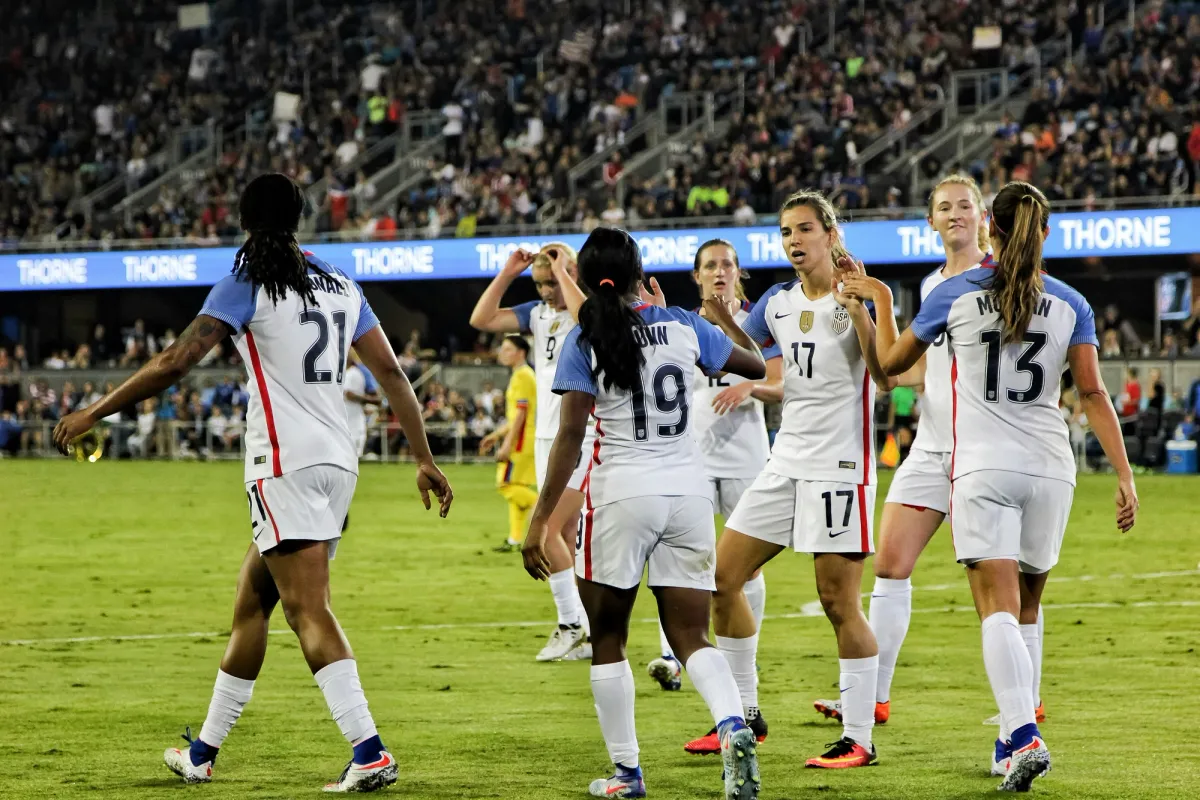
The US Soccer Federation is active year round, but with FIFA in their backyard, they’ve shown up even stronger via their channel on X and through their news page. Team USA’s elimination, following their loss to Belgium, prompted a timely moment to make sure audiences stayed engaged. With the final whistle blown, you could hear the broadcast announcer’s angst as they knew some casual fans might bow out. US Soccer took the opportunity to cross pollinate their properties, reposting a video from the US Soccer Youth National Teams (@USYNT) and Major League Soccer (@MLS) promoting excitement about other US Soccer events. Brands and marketers need to have a communications plan to keep audiences engaged and not lose the momentum their “big moment” has brought them.
Honorable Mentions: Sam Adams
When Scottish FIFA fans touched down in Boston in June for the World Cup, it was reported they drank the city dry. For a city with a drinking scene worthy of shipping up to Boston, it was something most bar and taproom owners had never seen before. The internet went wild over the situation, and Boston-based beer company Sam Adams capitalized on the moment. Sam Adams “newsjacked” the story and positioned their brand within the frenzy through traditional PR and social media content. As quoted in Reuters, Sam Adams executives provided commentary on the event and shared how the company had “emergency” shipments of the beer for bars and taprooms around the city to prepare for the following matches. These efforts are a reminder to brands that when you have your chance, don’t be afraid to participate and share your message.
Always in Play: Coca-Cola
When it comes to all three of our brand tenets, we would be remiss to leave out Coca-Cola. The shape of a Coke bottle is distinguishable, lasting, and probably one of the most recognizable product packages in the world. Share a Coke is also one of the most timeless campaigns that, similar to Lay’s FIFA campaign, promotes enjoying the product with friends and family. And, when we say timeless, we really mean it stands the test of time. Their messaging and packaging just work. They’ve introduced countless playful campaigns under this umbrella, where, even if it’s become expected (like with the Devil Wears Prada 2), it puts a smile on your face, because you too are enjoying life…with a Coke.
++++
When marketers are thinking about showing up on the world stage, they’re considering their brand, their audience, and their messaging. This triad needs to operate together. And all of it has to be done against the backdrop of culture. What is going on now? How does this land in this sense of time and place?
The final match will be played at the New York New Jersey Stadium in East Rutherford, New Jersey, where we’ll see which footballing country lifts the trophy, and which individual players takes home the Golden Ball (tournament’s best player) and the Golden Boot (top scorer).
But remember, football doesn’t end there! The FIFA Women’s World Cup will be held in Brazil next year. Tune in, and you might notice the 4 stars on the women’s jerseys above the US Soccer Shield. These represent the women’s 4 World Cup wins (1991, 1999, 2015, 2019).
It'll be at least another four years before the US men get their first. Until then, the marketing playbook stays the same: know your brand, know your audience, and know your message. Miss any one of the three, and you're just another logo on the sideline.

Written by
Maddy Loucas
Communications Specialist
